Making high-quality maize silage is essential for profitable livestock production in the Western Cape. At Overberg Agri, we support farmers with expert advice and proven best practices to help them succeed throughout the silage-making process. From selecting the right crop and monitoring dry matter content, to proper chopping, compacting, and covering, every step influences silage quality. This guide to the 6 C’s of Silage Making outlines trusted methods to improve fermentation, reduce dry matter loss, and maximise feed efficiency for dairy and beef producers.

Expert contribution by Lood Visser (right) | Managing Director, SAS Southern Agricultural Services | M.Sc. Agric – Animal Nutrition
1. Crop Quality

The first step in successful silage making is selecting a suitable crop. Choose high-potential forage varieties such as maize, forage sorghum, grass, or lucerne, depending on the intended use and regional conditions. Crops should be well-fertilised to maximise yield potential, and fields must be weed-free to ensure clean material with minimal contamination. Timing is also critical — crops must be harvested at the correct stage to achieve the ideal moisture content, typically between 63–67% moisture content for maize and slightly higher for other forage types. For lucerne and grasses, wilting is recommended to reach appropriate dry matter levels.
2. Content of Dry Matter (DM%)

The moisture level of the silage crop at harvest has a direct impact on fermentation and preservation. If the material is too wet, it will lead to leachate and poor fermentation. Conversely, material that is too dry will not compact well, leading to the risk of air pockets and mould development. For maize silage, the optimal dry matter content ranges from 33–37% (equivalent to 63–67% moisture). For lucerne and grass silage, particularly when wilted, the dry matter target increases to 35-40%, or 60-65% moisture. Monitoring this ensures the crop ferments properly and stores safely over time.
3. Chop Length

The chop length of the forage plays a crucial role in effective compaction and fermentation. As a general rule, forage should be chopped to a length of 1–3 cm, depending on the moisture level and fibre content of the crop. Drier material should be chopped shorter to assist in compaction and reduce air entrapment. It is important that the chop length correlates with the harvesting rate and the compaction capability of the equipment. If chopping is too coarse, proper sealing becomes more difficult; too fine, and it can affect rumen function in animals. The key is a uniform chop that balances these considerations.
Read more about the CLAAS JAGUAR forage harvester that offers precision chop length adjustment from the cab.
4. Compacting

Effective compaction is essential to create the anaerobic conditions required for fermentation. Silage must be applied in thin layers of 100–200 mm and compacted consistently as each layer is added. The compacting machinery used should weigh at least 40% of the weight of the material being harvested per hour to ensure sufficient pressure is applied. Poor compaction leads to air pockets, heating, and spoilage. Proper compaction improves preservation and reduces dry matter loss, ensuring the quality of the silage remains high from sealing through to feed-out.
5. Covering

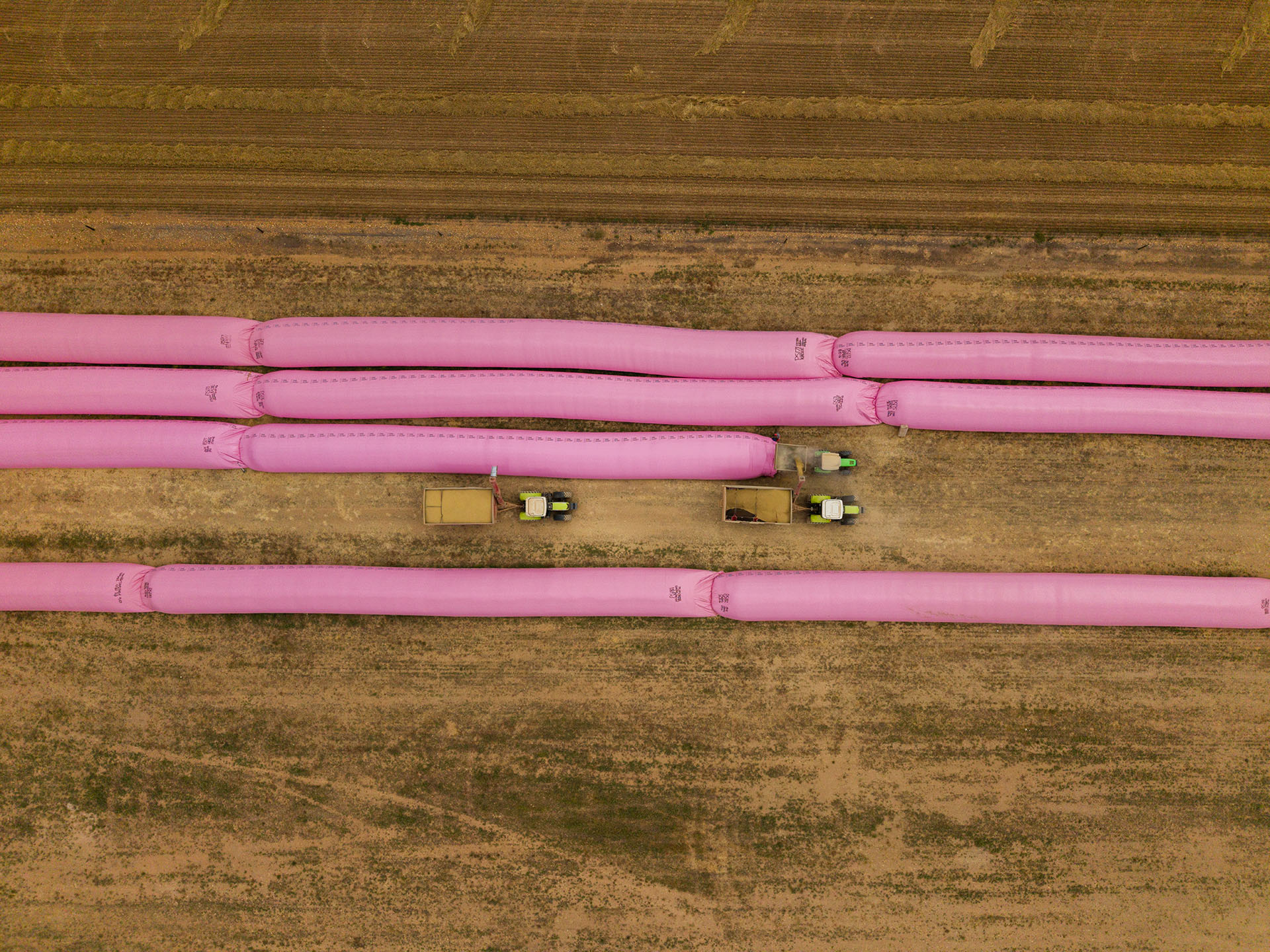
Once compacted, the silage should be covered promptly. Ideally, the cover should be applied within 48 hours from the first load to prevent oxygen exposure. Use a white plastic film, as this reflects heat more effectively than darker colours, keeping the silage cooler. A thin stretch film helps maintain an airtight seal. To keep the plastic secure, weigh it down evenly with tyres, sandbags, or gravel bags. Keeping animals off the silage and ensuring water is directed away from the bunker are also essential to prevent contamination and spoilage.
6. Care of Silage

Once ensiled, the silage must be managed carefully until feed-out. Always maintain a tight, smooth bunker face and avoid leaving silage exposed for long periods. Open only the amount required each day to minimise air infiltration. During feed-out, monitor the face of the silage for signs of spoilage or mould, and remove any contaminated sections. Good face management, combined with proper covering and compaction, preserves quality and ensures consistent feeding value for livestock.
For all your silage covering needs — including silage pit covers, bale cord, net, and wrap — please contact your Overberg Agri Branch Manager.